| Sun | Mon | Tue | Wed | Thu | Fri | Sat |
|---|---|---|---|---|---|---|
| 1 | 2 | 3 | 4 | 5 | ||
| 6 | 7 | 8 | 9 | 10 | 11 | 12 |
| 13 | 14 | 15 | 16 | 17 | 18 | 19 |
| 20 | 21 | 22 | 23 | 24 | 25 | 26 |
| 27 | 28 | 29 | 30 | 31 |
CATEGORIES
RECENT ENTRIES
BLOG ROLL
Reading material
|
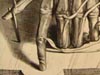
What does it mean to use a book, rather than read it? Exploring this question through a wide collection of old and unusual texts, Book Use, Book Theory: 1500–1700, a Special Collections Research Center exhibit on display through June 15, focuses on the book as a material object and practical tool. Prominent among the displays are eye-popping anatomies, intricate sky maps, and other illustrated works, including the anachronistic Greatest of All Time: A Tribute to Muhammad Ali (Taschen, 2004), a book so large it’s “almost unmovable.” Nestled among these are smaller treasures, such as an intricately embroidered Bible and a tiny Latin medical guide, only a few inches square.
A.L.M.
Photo:
William Cowper (1666-1709). The Anatomy of Humane Bodies, with Figures Drawn After the Life by Some of the Best Masters in Europe. Oxford: for Sam. Smith and Benj. Walford, 1698. Rare Book Collection, From the Collection of Mortimer Frank.
April 29, 2005