
| Sun | Mon | Tue | Wed | Thu | Fri | Sat |
|---|---|---|---|---|---|---|
| 1 | 2 | 3 | 4 | 5 | ||
| 6 | 7 | 8 | 9 | 10 | 11 | 12 |
| 13 | 14 | 15 | 16 | 17 | 18 | 19 |
| 20 | 21 | 22 | 23 | 24 | 25 | 26 |
| 27 | 28 | 29 | 30 | 31 |
CATEGORIES
RECENT ENTRIES
BLOG ROLL
Fight fire with forum
Nine of the nation's most controversial scholars took to the podium "In Defense of Academic Freedom" at a packed Rockefeller Chapel on Friday. The conference, which featured Tony Judt, John J. Mearsheimer, and, via video, Noam Chomsky, was held in the wake of two tenure decisions at nearby DePaul University that set off a firestorm in the academic community.
This past June Norman Finkelstein—a controversial historian of the Holocaust and critic of the United States's relationship with Israel—was denied tenure at DePaul. His supporters, including University of Chicago political-science professor Mearsheimer, claim that Finkelstein, whose "scholarship is known around the world," was dismissed in the face of "outside pressure," notably from Alan Dershowitz, a forthright defender of Israel and lauded Harvard Law professor. Mehrene Larudee, a supporter of Finkelstein's at DePaul, was also denied tenure.
Noam Chomsky, Massachusetts Institute of Technology professor emeritus of linguistics, could not attend the conference in person, but he addressed the crowd of approximately 1,500 by video, declaiming "the ongoing assault on academic freedom" as part of universities' general "conformist subservience to power."
Tony Judt, professor of history at New York University, elaborated on the academy's susceptibility to power, taking up the cause of Mearsheimer's new book, The Israel Lobby. Judt criticized the interests that, he said, silence frank discussion of Israel's policies with accusations of Holocaust denial and anti-Semitism. Such efforts preclude "the openness to say that there is a difference between hating Jews and criticizing Israel," Judt said, warning, "if we don't allow that discussion we may get real anti-Semitism."
Ethan D. Frenchman, '08
 |
 |
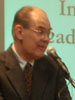 |
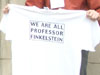
Photos (left to right): Finkelstein's supporters monger T-shirts before the conference; attendees file into Rockefeller Chapel; Mearsheimer addresses the crowd as Columbia professor Akeel Bilgrami, PhD '83; Tony Judt; and writer and conference organizer Tariq Ali look on (left, center, and right, respectively).
October 17, 2007